Spots Unknown Under the skin of San Francisco

Possibly the Best Use of San Francisco in a Film, Ever

Possibly the Best Use of San Francisco in a Film, Ever

Sure, we've got Bullitt, Dirty Harry, Streets of San Francisco, and Trauma. But hot damn, if this isn't the awesomest use of a San Francisco setting for a film sequence I've seen yet...

It's from the 1958 noir, The Lineup, and I challenge you to watch to the end of this 9-minute collection of clips. I promise you, if you haven't seen it before, the reward is tremendous.

Not only do you get to see the outside and inside of the Sutro Baths just 8 years before they burned down during demolition, but what's happening in these shots is downright fascinating. I won't spoil it except to say it involves one terribly sketchy Eli Wallach, a mysterious dude in a wheelchair, a cop, a blimp, and nuns.

Oh, and a climactic act of violence that has to be seen to be believed.

Part of me now wants to see the whole movie, but part of me just wants to hold in my memory the jarring assembly of clips below as a unified and complete work in itself. Check it out:

Sutro Baths Fire, 1966, San Francisco
Sutro Baths fire, 1966. Photo Copyright Brad Schram

(Video Spotted @)

Albion Brewery & Castle

Albion Brewery & Castle, San Francisco

In 1870, an enterprising English immigrant to San Francisco built a castle home on top of a secret cavern spring and used its cold, pure water to brew beer.

Albion Porter & Ale Brewery lasted until 1919 when Prohibition forced it to close. It was resurrected in 1928 as Albion Water Company, selling bottled water, which it did until 1947.

It was almost destroyed to make room for a freeway in 1961, but survived. It stands today on its original spot in Hunter's Point. The caverns still exist as well, and the spring generates 10,000 gallons of fresh water every day, which empties into the Bay. (The castle once served as the office for Laughing Squid's web hosting tech support crew.)

It went up for sale in September 2009 as a private residence for $2.9 million. Does anyone know its current status?

Here are some brand new photos of the caverns, posted to the Oakland Museum of California's Facebook page.

Info links: 1, 2, 3, 4

Albion Brewery & Castle, San Francisco

Pony Express Turns 150

Pony Express Turns 150; photo by bikingantoine

Amidst all the furor over the impending USPS apocalypse, we might take a moment to remember that April 3rd is the 150th anniversary of the Pony Express.

It delivered mail between St. Joseph, Missouri and San Francisco in about 10 days - half the time claimed by stagecoach (it promised 23 days, but was almost always much, much longer). But the Express operated for only 18 months until the telegraph's westward expansion obsoleted it.

During its short life, it embodied and perpetuated cultural motifs such as "cowboy vs. Indian," "man vs. technology," and the gold/silver rush.

It has remained highly romanticized to this day, with both Wells Fargo and the USPS appropriating the "Pony Express" mark for subsequent branding efforts.

Some fun facts:

  • 600 "horses" (some were mules!) and 75 riders were in the fleet, each galloping about 60 miles until reaching the next relay station.
  • The riders were usually teenaged boys.
  • Horse and rider rode a riverboat from Sacramento to San Francisco for the final relay of the trip.
  • Stories exist of ads saying, "“Wanted: Young, skinny, wiry fellows, not over eighteen. Must be expert riders, willing to risk death daily. Orphans preferred. Wages $25 a week.” The stories have never been corroborated.

Links: 1, 2, 3

Tagged as: , 1 Comment

“Playland at the Beach” Documentary Premier

Playland at the Beach

This now-extinct amusement park at Ocean Beach was established in the 1880s and dismantled in 1972. It has a rich, weird history. Rick Prelinger unveiled some great amateur footage in his latest Lost Landscapes screening in December.

On March 16th, the Balboa Theater will premier a full-length documentary about the park by Tom Wyrsch.

Gone now for more than 3 decades, it remains one of the city’s lost treasures. Go back in time to see Laffing Sal, the Fun House, the Carousel, the Big Dipper, the Diving Bell, Dark Mystery, Limbo, Fun-tier Town, and much, much more, all through the eyes of the people that were there. The first and only documentary ever made about Playland.

Playland Documentary, San Francisco

(Spotted @SF_Explorers)

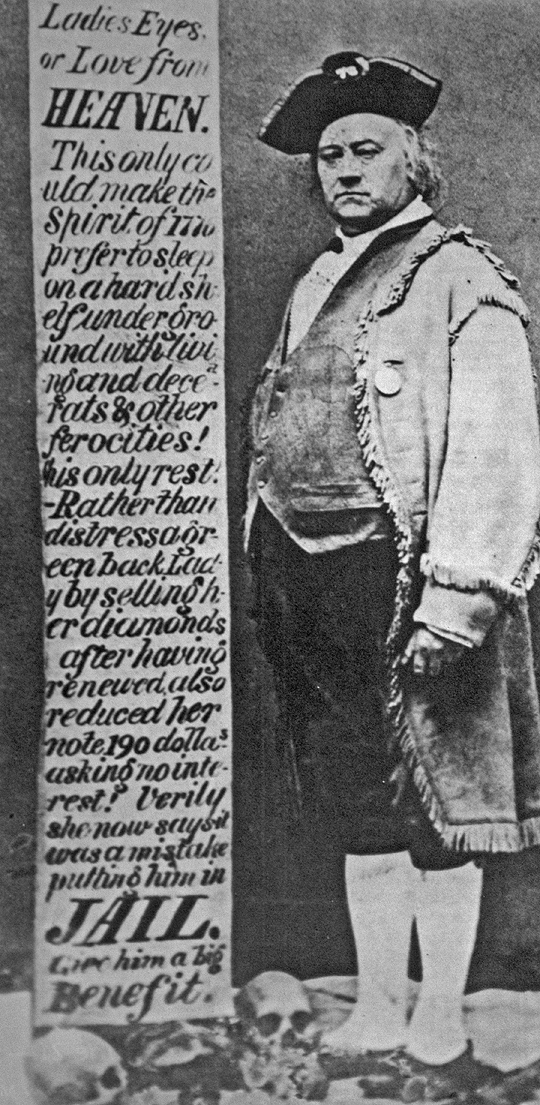
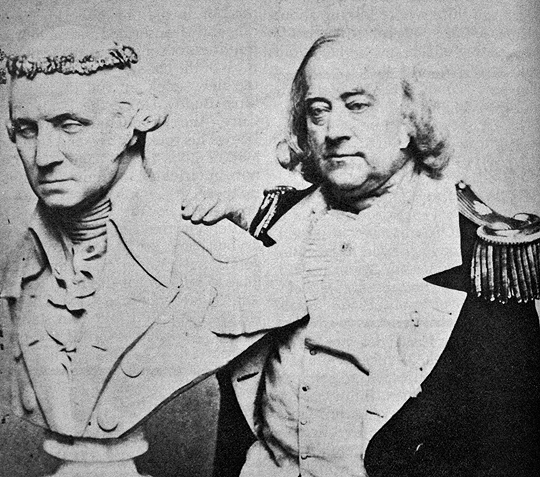
Historical Heart-Throbs of San Francisco

Historical Heart-Throbs of San Francisco

Historical Heart-Throbs of San Francisco

Just in time for Valentine's Day! View the complete gallery on Flickr. Know of others? Link to them in the comments...

Today’s ‘06 Lesson: Mission Dolores

Old Photo of the Day: Mission Dolores, San Francisco, found at Flickr stream of Steveningen

Something about the empty space in front of San Francisco's oldest building, pictured above in 1881 according to the caption on Flickr, draws me in. It was made of adobe. The brick-construction Gothic Revival replacement next to it crumbled in the '06 quake:

Mission Dolores Replacement Church Destroyed

Most Unfortunate Business Timing Ever?

Most Unfortunate Business Timing Ever?

These fine fellows look like they're feeling on top of the world in their well-stocked glass shop at 18 Sutter Street, San Francisco. The year? You guessed it: 1905.

As the story goes, the business didn't survive the quake of '06 and the family relocated to Los Angeles. Ironically, I'm sure there was a tremendous demand for their product as the rebuilding commenced.

(Spotted @ the Flickr stream of bcgreeneiv)

Bay Bridge Pretty in Pink

Bay Bridge in Pink from the Flickr stream of shawnmebo

A scanning project to capture 100 years worth of family photography includes some shots of San Francisco in the '50s and '60s, taken by the scanner's grandmother. I love that she kept the pink hue on several of them, which I assume is from improper film development. (It would have been too easy to grayscale them in Photoshop.)

(Spotted @ the SU Flickr pool.)

Tagged as: , 1 Comment

Mariposaaah!!!

"24th Street Intersection" by Wayne Thiebaud

The artist Wayne Thiebaud is known for his paintings of "cakes, pastries...and toilets," but this 1977 interpretation of a mythical intersection at 24th Street and Mariposa, submitted by friend o' the blog Jacki, is our favorite - for obvious reasons.

Thiebaud once said:

"I was playing around with the abstract notions of edge - I was fascinated, living in San Francisco, by the way different streets just came in and then just vanished. So I sat out on a street corner and began to paint them." It was the "sense of edges appearing, things swooping around their own edges that I loved," he recounted (Wayne Thiebaud: A Paintings Retrospective, exh. cat., Fine Arts Museums of San Francisco, 2000, p. 58).

(via Goldenfiddlr)

Tagged as: , , 4 Comments

Now Online: Lost Landscapes of San Francisco 4

Now Online: Lost Landscapes of San Francisco 4

In case you missed Rick Prelinger's excellent screening of mostly amateur-shot archival footage back in December, Fora.tv has put it online in its entirety. Watch it:

To navigate a list of chapters, go to the Fora.tv site.

UCSF Saving the Lives of Pregnant Women in Developing Countries

Patient treatment room in a Zambian gynecologic emergency ward

A friend just left San Francisco for her second "tour of duty" in Zambia, working for UCSF’s Department of Obstetrics, Gynecology and Reproductive Sciences, which develops a low-tech first-aid device for hemorrhaging pregnant women called LifeWraps. I was impressed and horrified by her efforts combating the high frequency of death and disability around childbirth. More after the jump...

Valencia Street Sinkhole

Valencia Street Hotel before fire, Bancroft Library

Valencia Street Hotel, after the fire, at Bancroft Library

We've seen the aftermath before, but this before/after is impressive, no? More after the jump...

Words in Stone

"Alive/'ishsh" by Jana Asenbrennerova / The Chronicle

Carl Nolte offers a reminder about the original inhabitants of a re-activated Mission Bay:

"There are thousands of us," said Andrew Galvan, who is a descendant of a Bay Miwok man named Liberato and an Ohlone woman called Obulinda who were married in Mission Dolores in 1802. Galvan is the curator of Mission Dolores and is not extinct.

26 Nixed

24-899 from 1943

24-907 from 1943

It's bad enough that the elimination of the 26-Valencia will wreak havoc on my personal life. But it turns out that the line I often stumble upon to get home has been running since 18-fucking-92 (shown above in its 1943 variation).

Back then, it was a trolley that ran from Steuart St. near the Ferry Building all the way down to the cemeteries in Colma. Shit, if that still ran, I could take it to Target!

The final insult is that, apparently, electric streetcars themselves were largely built in San Francisco as a way to develop the Sunnyside area - my homeland - for its real estate. And this is how I'm repaid - with forced late-night pedestrianism and wallet-thinning cab rides.

‘For Saving Life’ – Streetcar Fender Design from 1895

Model of a Streear Fender,

With the forthcoming death of several MUNI lines, I suppose transit is on the brain. More after the jump...

Blackie the Wonder Horse Swims the San Francisco Bay


Why on God's green earth did anyone dream up this 1938 stunt? To quote the narrator, "Your guess is as good as mine."

This poor horse chased a handful of sugar and towed a fat, useless human named "Shorty Roberts," as it swam the Golden Gate just to settle a bet about whether horses can swim:

The swim took 23 minutes and 15 seconds---an hour less than it had taken an Olympic swimmer. When Blackie and Shorty arrived in SF, the SPCA was waiting, but admitted that Shorty looked much worse than the horse and didn't cite him. Shorty always insisted that the horse loved swimming in the bay.

Sure he did, and why not?

(Spotted@)

Recommended book: Historic Photos of San Francisco

Film of Japanese Americans in San Francisco, circa 1920

The black and white footage at the beginning of this video, grabbed from the Square America blog, shows some dapper Japanese-American immigrants in the 1920s in San Francisco. Especially dignified given the open historical discrimination against them, even before the internment atrocities of WWII.

Be sure to check out this poignant 1942 timeline from the SF Chronicle of the history of the Japanese American community in SF, which ends with the last of 5,280 people being "evacuated" out of the city.

Last night Japanese town was empty. Its stores were vacant, its windows plastered with "To Lease" signs. There were no guests in its hotels, no diners nibbling on sukiyaki or tempura. And last night, too, there were no Japanese with their ever present cameras and sketch books, no Japanese with their newly acquired furtive, frightened looks...

They left San Francisco by the hundreds all through last January and February, seeking new homes and new jobs in the East and Midwest. In March, the Army and the Wartime Civil Control Administration took over with a new humane policy of evacuation to assembly and relocation centers where both the country and the Japanese could be given protection. The first evacuation under the WCCA came during the first week in April, when hundreds of Japanese were taken to the assembly center at Santa Anita. On April 25 and 26, and on May 6 and 7, additional thousands were taken to the Tanforan Center. These three evacuations had cleared half of San Francisco. The rest were cleared yesterday.

I wonder what became of the hopeful, posing folks in the above film clip during this era. (I presume the second, color portion of the clip means they managed to stay together, even if they had to move to Chicago.)

Tagged as: , 2 Comments

Ticket Giveaway Winning Images

Tea Eggs in Chinatown, San Francisco, photo by Erik Wilson, known as Generik11 on Flickr
Erik Wilson, known as Generik11 on Flickr

Footbridge over Stevenson Street, San Francisco, photo by Igor Uriarte, known as 20R3Mun on Flickr
Igor Uriarte, known as 20R3Mun on Flickr

They each get a ticket to Rick Prelinger's Lost Landscapes of San Francisco.

Thanks to everyone who submitted images and helped to get our Flickr pool started with a bang.

If you haven't bought your ticket to the screening yet, hurry up, because they're going fast.

“Missions, my lord, missions – that is what this world needs”

Father Junipero Serra

So wrote Father Junipero Serra, that great self-flagellator, to the Spanish Commandant General upon encountering the welcoming Ohlone Indians on the land that is now San Francisco. Congregations of Indians were struck with awe as Serra struck his body with chains, pounded his chest with stones, and burned it with hot candles.

He dreamed of a utopian 10-year apprentice program whereby, after intense "rehabilitation," the native residents would have fully adopted the customs of European living and could be given back some of their land as devout Catholics. More after the jump...

Valencia Street Lane Saga, 1925-2010

Valencia Street, San Francisco, 1925

With the Mission on the verge of getting its Valencia Street West sidewalk back between 16th and 19th Streets, reader Brian Stokle points us to this nifty Flickr set complete with drawings of how Valencia Street looked over the ages. According to brunoboris, with the latest round of modifications, the sidewalks will return to their original width. More after the jump...